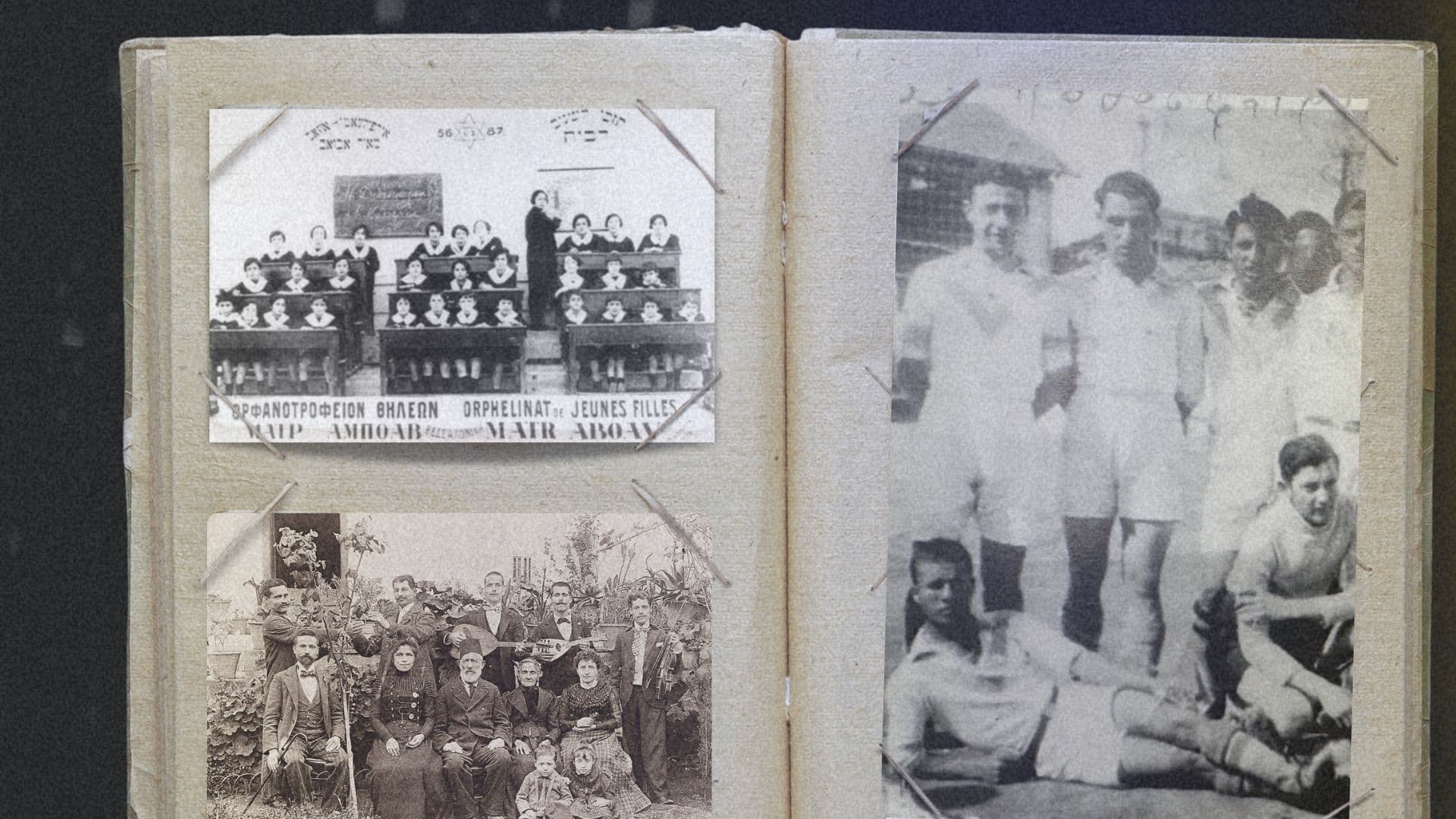

Before building a Synagogue, you must first build a School (Torah). The Jews were called the people of the Book -- "Am ha-Sefer", referring to the Torah (Bible). The entire history of the Jewish people has been based on knowledge, through oral and written word. In the era of the great Rabbis, knowledge through education constituted the pillar for teaching values, traditions, history, and moral principles.
Yochanan Ben Zakkai, the only thing he asked from the Roman conqueror was a school. The school is often compared to a nursery -- and not without reason. It is like a tree that takes root, spreads branches, blooms and bears fruit. This is somewhat how the history of Jewish community schools in the Ottoman Empire and later in Greece began.
The first schools provided basic religious education. The focus of learning was the study of sacred texts: the Torah, the Law, the Talmud and other sacred writings. The teachers were mainly Rabbis. Education was divided into Cheder (a type of elementary school) for young children -- where they were taught writing, reading and basic Hebrew literature -- and Yeshiva (higher religious school) for advanced students and future Rabbis. The language of instruction was mainly Hebrew, but also Ladino, in Sephardic communities.
The Alliance Israélite Universelle
In 1858, the Frenchman Isidore Cahen expressed the view that the Jews of the Diaspora should face the challenges of their time. He thus proposed the creation of a global organization titled Universal Jewish Alliance, which would defend their rights, offer modern Jewish education to children and contribute to the establishment of new schools or cooperation with existing ones.
The goals of the Alliance were:
The Alliance Schools in Greece
The Alliance showed early interest in Jewish education in Greece. According to historical data from the Alliance Archives in Paris, its schools operated in ten cities of Greece, during the period 1865--1934.